sez amendment rules 2025
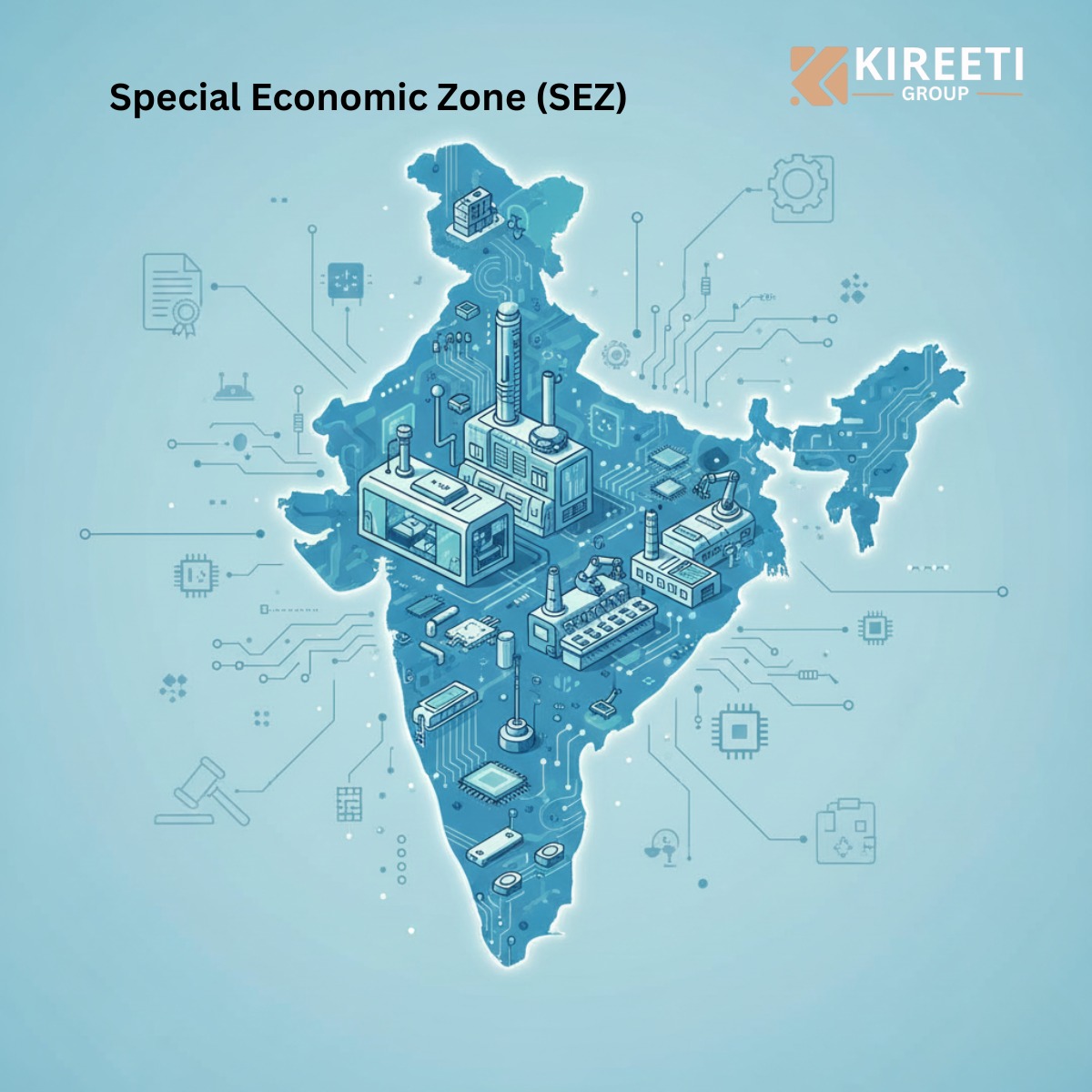
SEZ Amendment Rules 2025
India’s 2025 SEZ Amendments: What Changed on 3 June 2025 and Why It Matters
India’s latest SEZ reform, the Special Economic Zones (Amendment) Rules, 2025 notified on 3 June 2025, sharply relaxes land and operational rules to attract semiconductor and electronics manufacturing into SEZs.
What are the Special Economic Zones (Amendment) Rules, 2025?
- The amendment modifies the SEZ Rules, 2006 via Notification G.S.R. 364(E) dated 3 June 2025, issued under section 55 of the SEZ Act, 2005.
- It is a targeted reform, not a full new law: the focus is on semiconductor and electronic component manufacturing SEZs, with a few related changes to land norms and NFE/DTA treatment.
1. Big Reduction in Land Requirements
- For SEZs dedicated to semiconductor or electronic component manufacturing, the minimum contiguous land requirement is cut to 10 hectares, compared to much higher thresholds earlier for sector specific zones.
- For certain small/mountainous or North East multi product SEZs, the minimum land area in Annexure II is reduced from 20 hectares to 4 hectares, making SEZs feasible in geography constrained locations.
Why this matters:
- Developers no longer need huge land banks to build niche semiconductor/electronics SEZs.
- States and industrial clusters with limited land—especially hill states and North Eastern regions—can now propose smaller, focused SEZs.
2. Relaxed “Encumbrance Free” Land Rules
- Earlier, SEZ land generally had to be fully encumbrance free, which was difficult where land was mortgaged for project finance.
- The amended rules allow the Board of Approval (BoA) to relax this and accept land that is mortgaged or leased to government agencies, subject to conditions.
Practical impact:
- Developers can raise finance using land as security without automatically violating SEZ rules.
- Faster financial closure and easier participation by private developers and industrial parks.
3. Tweaks to NFE and Export Calculations
- For high tech manufacturing, the amendments allow “free of cost” goods and certain manufacturing services to be properly factored into customs valuation and Net Foreign Exchange (NFE) calculations.
- This aligns NFE norms with real business models in semiconductors, where consigned wafers, tooling or sample material may be supplied free or on special terms.
Benefit for units:
- Lower risk of artificial NFE shortfall just because part of the material flow is FOC or structured via global supply contracts.
- More realistic export performance assessment for capital intensive, long gestation projects.
4. Controlled DTA Sales and Logistics Flexibility
- The 2025 rules and related clarifications permit greater flexibility in Domestic Tariff Area (DTA) sales for semiconductor/electronics SEZs, subject to duty payment as per customs/GST law.
- They also dovetail SEZ operations with options like Free Trade & Warehousing Zones (FTWZs), bonded warehouses and domestic procurement, improving inventory and supply chain design.
What changes on the ground:
- SEZs in these sectors move from “pure export only” to a more hybrid model—serving both global and Indian markets legally, after paying applicable duties on DTA clearances.
- Units can structure more efficient hub and spoke logistics, using FTWZs and bonded facilities without constantly breaching SEZ rules.
5. Policy Intent and Early Approvals
- The Press Information Bureau notes that these reforms aim to boost high tech manufacturing, create high skilled jobs, and deepen India’s semiconductor ecosystem.
- Following the June 2025 notification, the Board of Approval quickly cleared SEZ proposals from:
- Micron Semiconductor Technology India Pvt Ltd for a semiconductor manufacturing SEZ.
- Hubballi Durable Goods Cluster Pvt Ltd (Aequs Group) for electronic components manufacturing.
Strategic context:
- The amendments are described as a “targeted and swifter approach” pending a broader SEZ/DESH overhaul, allowing government to tweak SEZ rules by notification for specific sectors.
- They align SEZ policy with India’s wider goals: reducing import dependence, capturing a share of global chip and electronics value chains, and complementing incentive schemes like PLI for electronics and semiconductors.
What Developers and Units Should Do Now
- Developers in electronics/semiconductor clusters should reassess old SEZ ideas that failed on land size—10 hectare dedicated zones may now be feasible.
- Prospective units (chip packaging, PCBs, components, EMS) should evaluate SEZ vs non SEZ locations again, considering:
- Lower entry land thresholds.
- Improved NFE treatment for FOC and service components.
- Possibility of calibrated DTA sales with duty payment.
If you share whether you are a developer, an electronics manufacturer, or a service provider supporting these sectors, a focused action checklist can be prepared on how to use the 2025 SEZ amendments for your project.