electricity and solar support for mh textiles
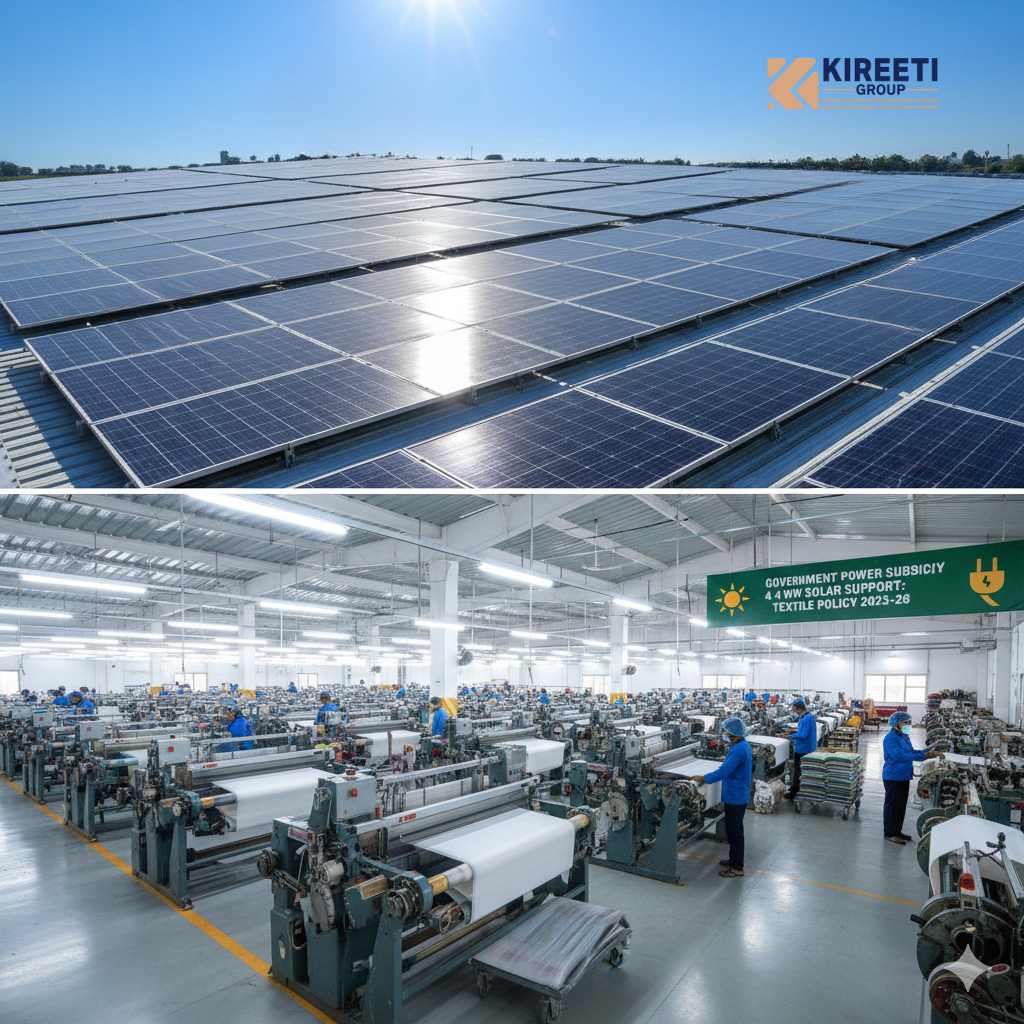
Electricity Relief and Solar Benefits under Maharashtra Textiles
Maharashtra’s Integrated and Sustainable Textile Policy 2023–28 offers a powerful electricity subsidy package that reduces current bills and helps textile units shift to solar power for long term savings. This blog explains how the subsidy works, who benefits, and what action textile entrepreneurs should take now.
Why is power subsidy critical for Maharashtra textiles
Electricity is one of the highest operating costs for spinning, weaving, knitting, processing and powerloom units in Maharashtra. High tariffs directly affect competitiveness against other states and low-cost international suppliers, especially for MSMEs and traditional clusters.
Through the Integrated and Sustainable Textile Policy 2023–28, the state government has decided to use power subsidy as a strategic tool to protect jobs, boost exports, and accelerate a shift towards cleaner energy. The design of the scheme mixes short-term tariff relief with a pathway to invest in solar power plants up to 4 MW for eligible units.
Core features of the electricity subsidy
Under the policy, existing textile units receive an electricity subsidy at a notified per-unit rate for a maximum period of two years. The Government Resolution places a cap of ?40 lakh per unit per month on the disbursement of this subsidy, preventing any single unit from cornering a disproportionate share of benefits.
The applicable subsidy rate per unit depends on the category (LT/HT, type of unit) and the zone where the unit is located, as detailed in the annexures of the policy GR. Eligible activities include units across the value chain, such as spinning, weaving/powerloom, processing, garments, and technical textiles that fall under the policy’s defined sectors.
Converting 2-year power subsidy into solar assets
The most innovative part of the scheme is the way the electricity subsidy converts into a capital subsidy for solar plants. For existing units, the total electricity subsidy received over 24 months is calculated and then treated as a capital subsidy that can be used to set up a dedicated solar power project.
This capital subsidy can support the installation of up to 4 MW of solar capacity, with overall financial caps in the range of about ?4.8 crore to ?9.6 crore depending on unit type and policy conditions, disbursed in two instalments after the solar project becomes operational. Units are free to install capacity above 4 MW, but any additional cost beyond the eligible limit must be financed by the unit itself.
Favourable rules for solar and net metering
The policy removes the usual 1 MW restriction on net metering for textile units, allowing them to fully utilize power from larger solar projects against their consumption. In addition, renewable energy supplied to these units is subject only to transmission charges of the energy department, with exemptions from several other levies that normally apply.
For new and expansion projects, the cost of a solar plant (up to 4 MW) can be included in the detailed project report and counted as part of fixed capital investment when calculating capital subsidy. This encourages entrepreneurs to plan solar integration at the project design stage rather than treating it as a later add-on.
Special additional rebate for powerloom units
Beyond the main policy, Maharashtra has also announced extra concessions for the powerloom segment till 2028. Simple powerlooms with motors below 27 HP receive an additional ?1 per unit subsidy, while advanced powerlooms above 27 HP get an extra ?0.75 per unit over and above existing support.
These additional rebates are expected to reduce the effective payable tariff for around 13 lakh powerloom units, making cloth production cheaper and supporting sales in both domestic and export markets. With nearly 55% of India’s textile industry located in Maharashtra, such targeted support has a statewide employment and competitiveness impact.
What textile entrepreneurs should do now
- Review your unit’s zone and eligibility under the Integrated and Sustainable Textile Policy 2023–28, using the official GR and guidelines on the Department of Textiles and Commissionerate of Textiles websites.
- Calculate the likely benefit from the two-year electricity subsidy (keeping the ?40 lakh per month cap in mind) and map how that amount can be leveraged as a capital subsidy for a solar plant up to 4 MW.
- For new or expansion projects, design your DPR to include solar capacity, energy-efficient machinery, and, where relevant, effluent treatment or recycling so you can maximize both capital and power-related subsidies under the policy window up to 2028.
Positioning your unit to fully use the power/electricity subsidy today and the solar-linked capital subsidy tomorrow can significantly lower long-term energy costs and strengthen profitability in Maharashtra’s textile sector.