digitalisation of bank guarantees under epcg scheme
Export Promotion Capital Goods (EPCG) – Bank Guarantee Refund
Digitalisation of Bank Guarantees and Bonds under EPCG
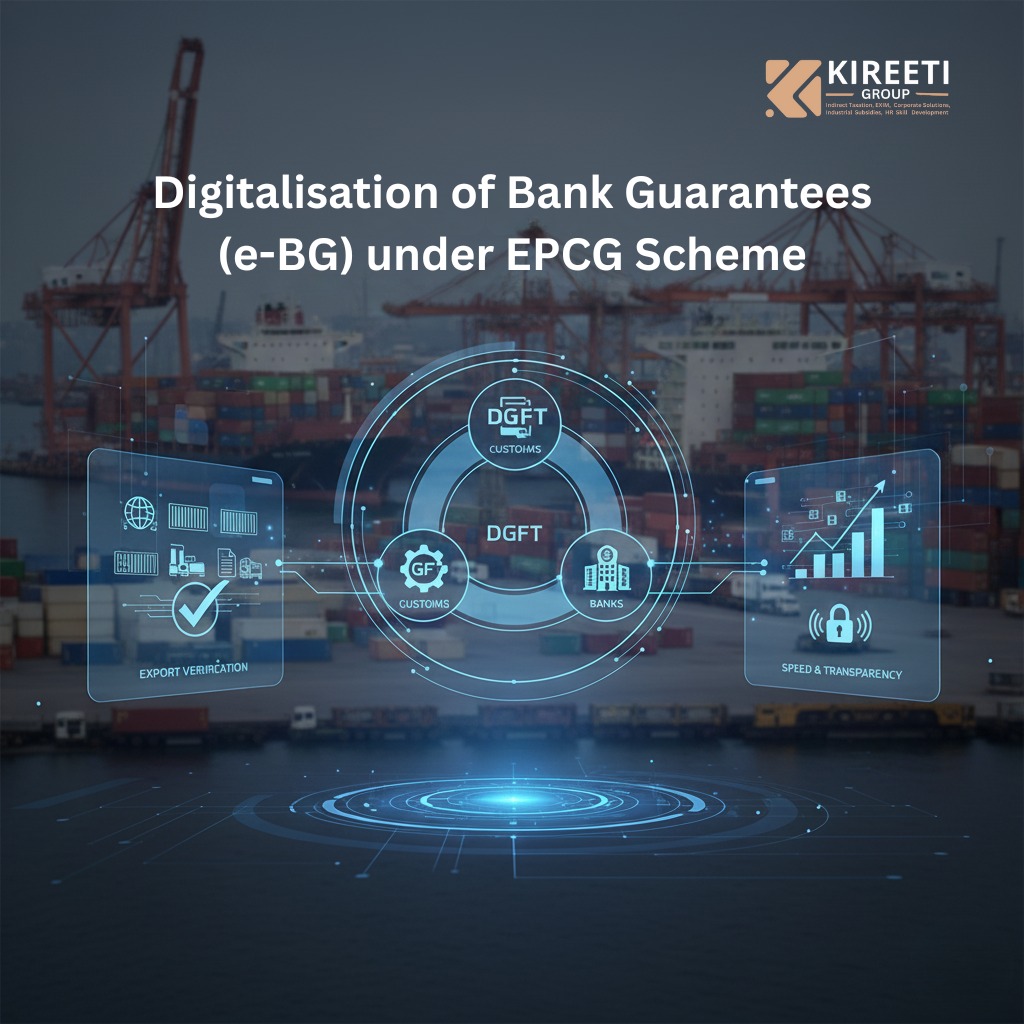
The digitalisation of Bank Guarantees and Bonds under the EPCG Scheme is transforming the way exporters interact with Customs, banks, and DGFT. The shift from paper-based documents to secure electronic systems has made EPCG compliance more streamlined, transparent, and reliable.
What are e-BG and e-Bond?
- An e-Bank Guarantee (e-BG) is a bank guarantee that is issued and transmitted electronically by the bank to Customs through secure messaging platforms such as SFMS, eliminating the need for physical submission.
- An e-Bond is a digitally recorded bond in the Customs system that captures the exporter’s obligations—such as the duty saved amount and export obligation under EPCG—and is electronically linked to the corresponding e-BG.
How electronic BGs operate with Customs and banks
- When an EPCG authorisation holder is required to furnish a bank guarantee, the issuing bank transmits the BG details electronically to Customs’ designated beneficiary bank (such as SBI or ICICI) through the SFMS network.
- Customs then validates these electronic records and updates its internal systems, allowing officers to view the BG and its linkage with the EPCG bond directly on screen. This reduces manual checks and significantly lowers the risk of forged, altered, or duplicate guarantees.
Key benefits of e-BG and e-Bond for exporters
- Faster processing and fewer physical visits
Electronic issuance and registration reduce paperwork, courier delays, and repeated visits to Customs offices and banks. - Improved security and transparency
Digitally recorded BGs and bonds offer stronger protection against misuse and tampering. Exporters can also track linked bond and BG details through system records, improving compliance visibility.
Impact on EPCG Bank Guarantee refund and closure
- The core procedure remains unchanged: exporters must complete the export obligation, obtain the EODC / Redemption Letter from DGFT, and then apply to Customs for bond and BG cancellation, after which the bank releases the BG margin or lien.
- However, with e-BG and e-Bond, Customs relies on system-based records rather than only physical files to verify the EPCG authorisation, imports, exports, and EODC. This makes the cancellation and closure process more structured, traceable, and audit-friendly.
What EPCG exporters should do going forward
- Exporters should coordinate with their banks to ensure they are enabled for e-BG issuance and SFMS transmission to Customs’ designated beneficiary banks.
- It is also important to maintain consistency of EPCG details—authorisation data, import records, and export performance—across DGFT and Customs systems. Proper alignment ensures smoother verification and faster BG cancellation once the EODC is issued.