dgft extends advance authorisation eop to 18 months
Dated. August, 2025
Issued By. DGFT
Subject: Advance Authorisation Update 2025 – Extension of 1st Export Obligation Period to 18 Months
*****
The Advance Authorisation Scheme remains the lifeline for Indian exporters for duty-free imports of raw materials needed for export production. However, compliance, especially meeting Export Obligation within short timelines, has always been challenging.
DGFT issued a major update in August 2025 that affects operational planning and compliance strategy for exporters availing of the Advance Authorisation Scheme. Below is a breakdown of the changes and their impact.
What Has Changed?
DGFT’s latest notification amends the EO requirements for inputs covered under mandatory QCOs, mainly chemicals and petrochemicals regulated by the DCPC.
The key update includes:
- The export obligation period for QCO-governed inputs has been extended from 6 months to 18 months.
- The timeline now matches the standard EO period of 18 months specified under HBP 2023.
This is a major relief for industries dependent on regulated raw materials or longer production cycles.
What This Means for the 1st Export Obligation Period
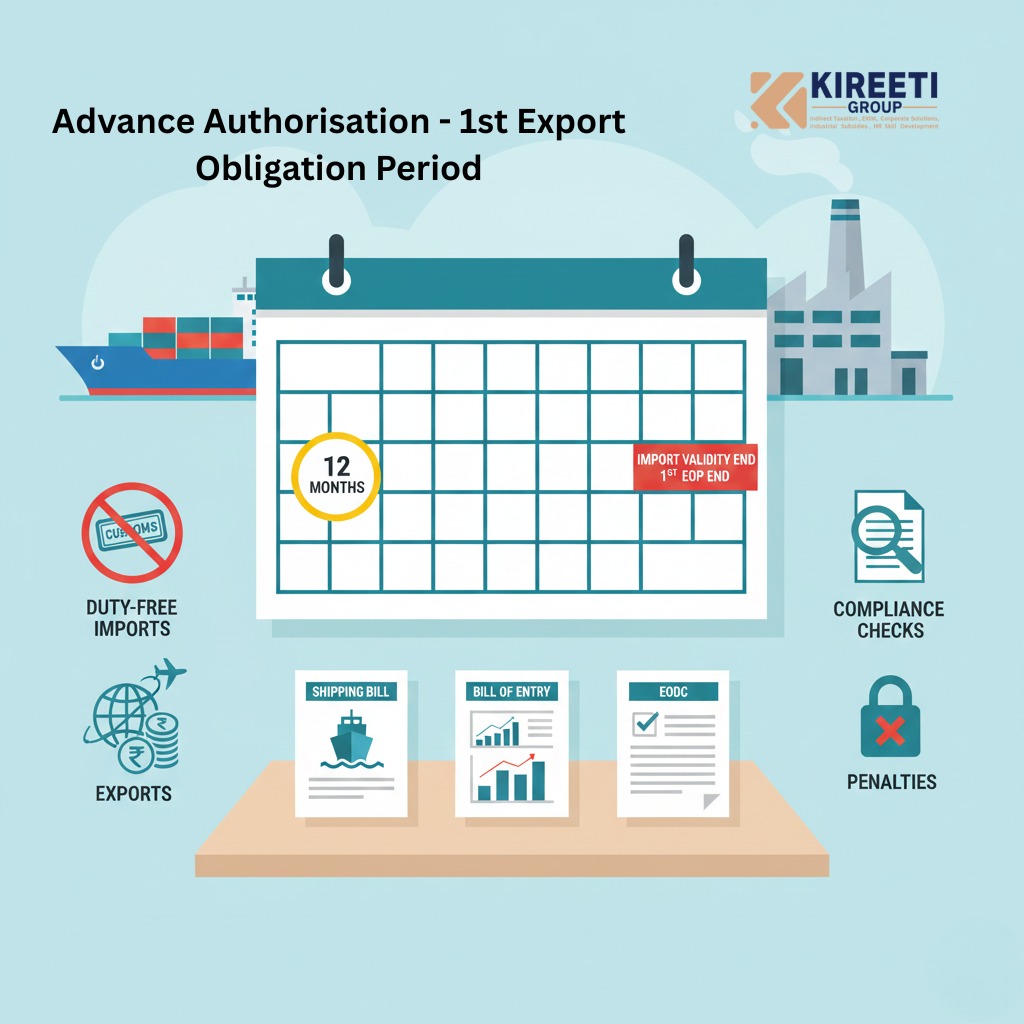
The 1st Export Obligation Period remains the main window in which exports must be completed under Advance Authorisation.
- The standard EO period continues to be 18 months from the date of issue of Authorisation.
- QCO-governed inputs now enjoy the same 18-month period instead of the earlier 6-month requirement.
- This harmonises EO timelines across most categories, making compliance planning smoother.
Exporters now get three times more time for QCO-regulated inputs, greatly improving feasibility.
What Stays the Same
- Inputs outside QCO coverage will still follow the standard AA rules, which already provide an 18-month EO period.
- Jewellery-related imports like gold, silver or platinum findings remain under the 180-day EO rule with no extensions.
Exporters must check the correct classification of their imported inputs before planning EO timelines.
Why This Matters: Key Benefits for Exporters
- More time for production and exports: Moving from 6 to 18 months gives industries greater operational space.
- Easier compliance under QCO rules: Longer EO periods match the time needed for certification-heavy imports.
- Better supply-chain flexibility: Helps absorb delays in imports, manufacturing or logistics.
- Higher competitiveness: Industries like chemicals, engineering goods and textiles can plan better without rushing exports.
Compliance Watchouts
- 18 months is still the upper limit; delays may attract penalties, interest or demand notices.
- Exporters must maintain timely EODC updates, revalidation tracking and proper documentation.
- QCO coverage is rapidly expanding; monitoring DGFT updates is essential.
Final Thoughts
The 2025 Advance Authorisation update is a major benefit for exporters dealing with regulated or complex inputs. The extended EO period aligns compliance requirements with practical manufacturing timelines. However, exporters must continue proactive compliance and verify classification of inputs to fully utilise the benefit.